For coaches, therapists & facilitators

The conversation you
can't get to directly

Everyone holds meanings about ideas they can't easily put into words — most of them formed so long ago the memory is gone. This is a tool for surfacing those meanings quickly, in a way that feels like play rather than excavation.

In a breakthrough session it can take hours to dig through the underlying issues and understand where a person is coming from — what we call their model of the world.

This process cuts that time down considerably. It gives you near-immediate access to what was hidden at the outset.

What it does in a session

Four things it changes

Whatever modality you bring — NLP, hypnotherapy, coaching, counselling, energy work — the deck sits alongside it rather than replacing it.

01

It opens the conversation

People often don't want to speak directly about what troubles them. Even in the coach's office or on the therapist's sofa, it can take a long while to reach the root. Handing someone an image gives them somewhere safe to put the thing they haven't said yet.

02

It builds rapport at a deeper level

Traditional rapport leans on matching, mirroring and language frames. This works differently: it invites the unconscious in a friendly way, puts people at ease, and gets them talking and sharing so they can experience change rather than just describe it.

03

It surfaces intentions and blocks together

People reveal what they value and want in an area — and, in the same breath, the hindrances that keep them from moving. Both arrive without you having to ask for either.

04

It meets them where they are today

Nobody wakes up the same as they were last week. A few minutes with the cards elicits the themes that are live right now, indirectly and conversationally, instead of resuming a story that has already moved on.

Why images and not questions

The language of the unconscious mind

Ordinary speech is one thing after another. Underneath it, there's a part of the mind that works all at once — a Gestalt, an all-at-once knowing — and it doesn't speak in sentences. It speaks in images, symbols and feelings.

Those messages don't come spilling out on request. Asking directly gets you the tidy version, the one the person has already told themselves. Give them a symbol instead and something else happens: they start explaining what it means to them, and somewhere in the middle of that sentence they hear themselves say something true.

That is the whole mechanism. You are not interpreting for them — you're giving their own knowing somewhere to land.
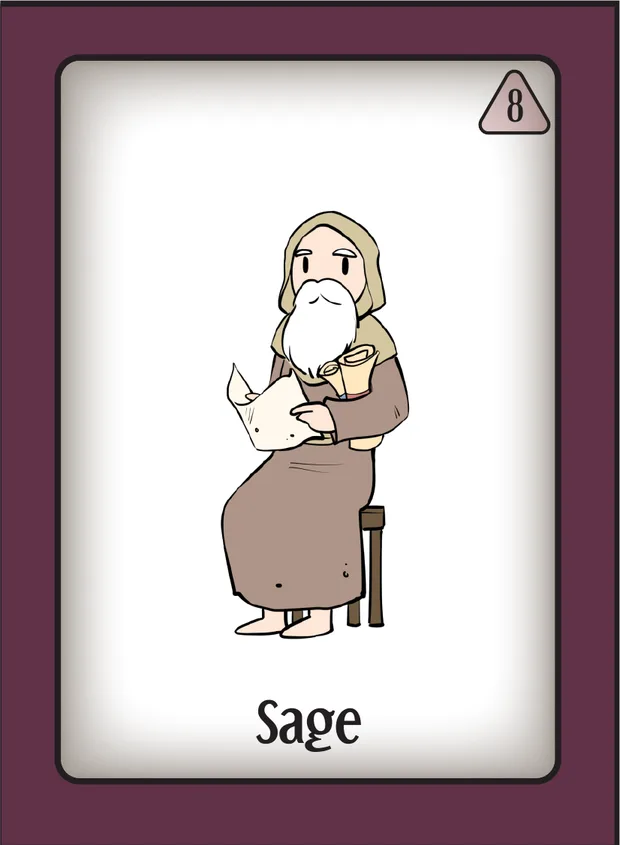
The Sage, an Archetype card
Archetypes The roles and character-selves a person is living from right now.
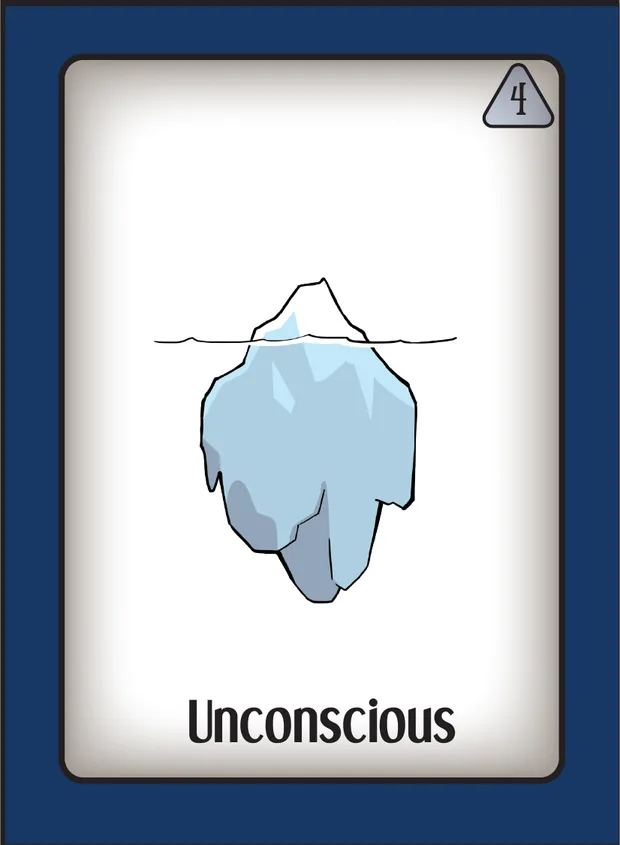
The Unconscious, a Concept card
Concepts Abstract ideas they hold in mind and act from — often unexamined.
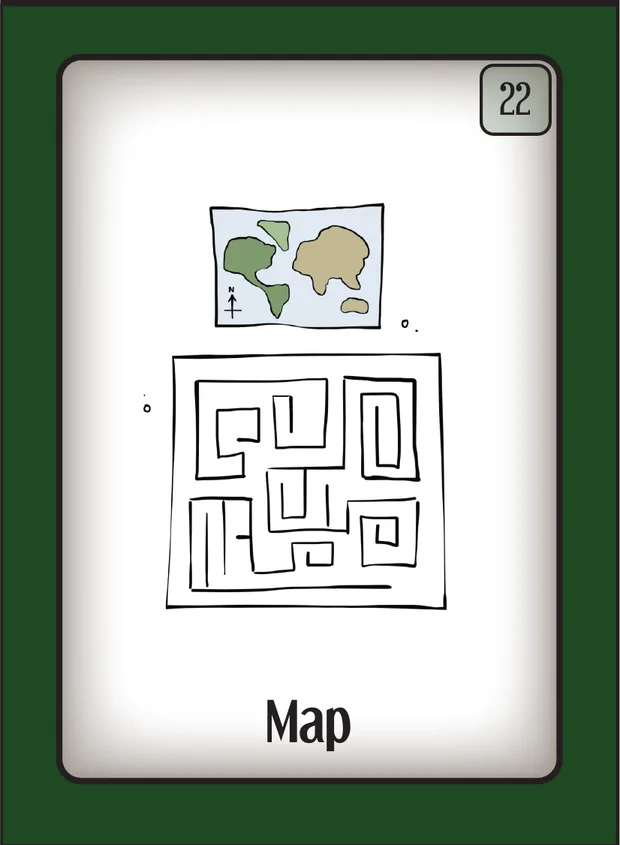
The Map, an Object card
Objects Symbols that carry personal history and connect inner to outer.

Where it fits in a practice

More places than you'd think

Discovery calls

Qualify without interrogating

Run it before you ask for any detail. You'll know quickly whether someone is a fit for your work — and they'll tell you far more this way than they would if you asked outright.

Ongoing clients

Re-open a stalled thread

When the work plateaus, a short pull surfaces what's actually live now rather than what was live when you started.

Couples & families

Get back to rapport

Partners, parents and children, long-standing friendships — the process reopens the relational line and makes transparency, even vulnerability, easier to reach.

In public

Break the ice anywhere

A coffee shop, a plane, the floor of someone's den. Live readings in public reliably draw a small crowd — it's the most natural lead generation there is.

Groups & workshops

Give a room a shared language

Teams and circles get a fast, non-threatening way to say what's actually going on, without anyone having to go first in plain words.

Your own practice

Sharpen your intuition

Working the process with many people measurably raises your sensory acuity — your ability to read what is happening as someone sits with an image.

A short session runs about ten minutes. A full one, twenty to thirty.

The skill you're building

An art and a science

The art

Picking up what isn't being said. Sensing, without mind-reading or pretending to see inside someone's head, that something is happening in there. Holding the space, asking the next calibrated question, and staying out of the way while a person finds their own words.

The science

Sensory acuity — watching the eyes, skin colour, breathing and small movements; listening for shifts in tone and tempo. Visual, auditory and kinesthetic calibration, and noticing the moment something changes. Combine the two, practise often, and the progress is rapid.

It's not the wand that performs the magic —
it's the magician holding it.

Beyond the first pull

Shadow cards, and what we'd rather not look at

Once the primary cards are read, ask your client to draw three more and lay them face down. Turned one at a time, they tend to represent what's hidden, repressed, or simply not yet in view.

The questions that work are simple. Is this something that, once dealt with, lets the outcomes of the primary cards emerge? Is this the next thing, waiting for you? Do you see the relationship between what's here — and what's here?

End by inviting them to photograph the layout. Most people want to. It gives them a visual anchor to return to during the week.

Also in the guidebook

  • Calibrated questionsThe elicitation set for each card, and how to follow an answer rather than lead it.
  • Full spreadsThe Timeline Weave, the Pyramid, and the Zodiac reading, walked through end to end.
  • Reading for someone elseHolding space, and the difference between facilitating and interpreting.
  • The practitioner's manualA section at the back on the coaching concepts behind the process.

Who's using it

Across a broad spectrum

Coaches · counsellors · therapists · hypnotherapists · teachers · facilitators · energy workers · ministers · social workers · anyone whose work depends on a person opening up

✦ Training & mentoring

Learn it properly

The deck and its guidebook are enough to start using the process straight away. If you want to go further — live practice, feedback on your own sessions, the deeper facilitation work — Bradley trains practitioners directly.

  • Bradley S. TompkinsMaster practitioner and trainer of NLP, certified clinical hypnotherapist. Thirty years and several hundred clients.
  • Built in practice, not theoryThe deck was designed and refined over years of one-to-one work, and it shows in the questions.
  • Members area includedEvery deck comes with a free account — video walkthroughs and the more advanced spreads.